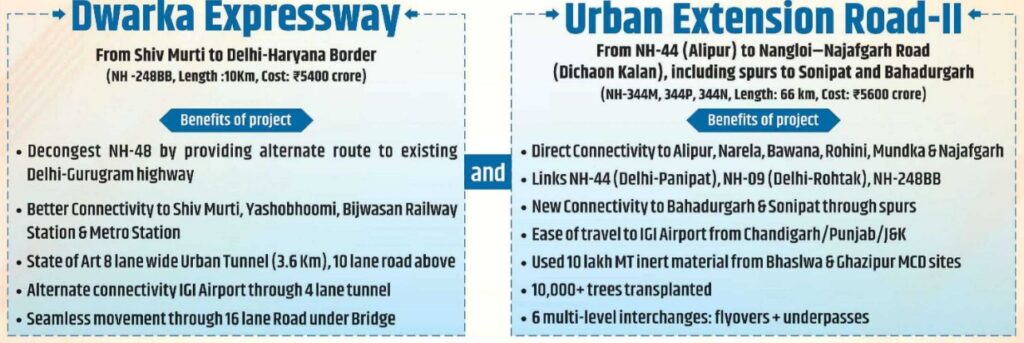
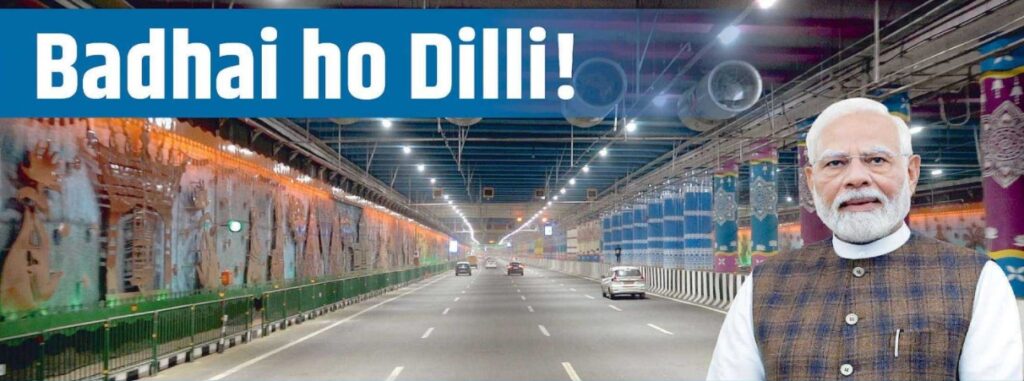
On August 17th, Prime Minister Narendra Modi inaugurated two major road projects in Delhi: the Delhi section of the Dwarka Expressway and the Urban Extension Road-II (UER-II). These projects, developed as part of a comprehensive decongestion plan for Delhi, are valued at nearly ₹11,000 crore combined. The inauguration ceremony took place in Rohini, with key figures like Union Minister for Road Transport Nitin Gadkari, Delhi Chief Minister Rekha Gupta, and Haryana Chief Minister Nayab Singh Saini in attendance. The PM also reviewed the projects and interacted with the construction workers.
Dwarka Expressway and IGI Airport Access
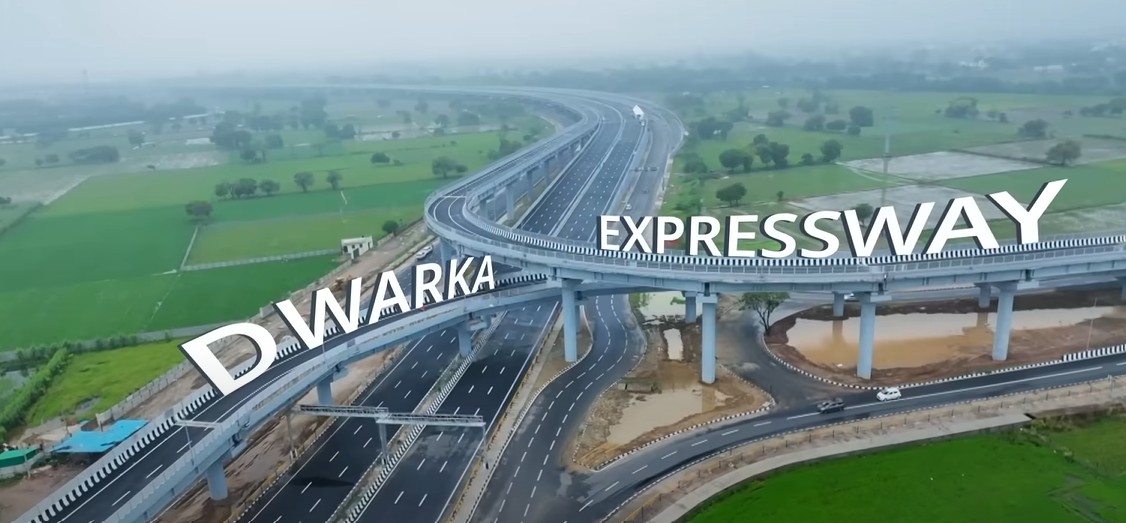
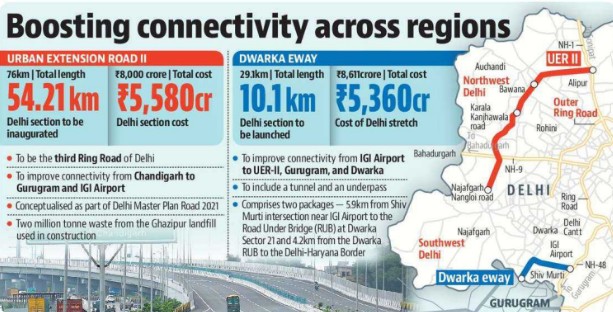
The Prime Minister inaugurated Packages 3 and 4 of the Dwarka Expressway, which comprise a 10.1-km section in Delhi. This new stretch, developed at a cost of approximately ₹5,360 crore, significantly improves connectivity between Delhi and Gurugram. A highlight of this section is a 5.1-km tunnel that provides direct, seamless access to the Indira Gandhi International (IGI) Airport. This will be a major relief for commuters, as it bypasses the often-congested routes to the airport.
Earlier, Packages 1 and 2, which cover the 29-km Haryana section of the Dwarka Expressway, were inaugurated in March 2024. The full expressway now connects Mahipalpur to Kherki Daula on NH-48, providing a vital alternative for traffic moving between the two major cities.
Urban Extension Road-II (UER-II): Delhi’s Third Ring Road
The UER-II is a 75.71-km road, a monumental project designed to serve as Delhi’s third Ring Road. It consists of five packages, with 54.21 km in Delhi and 21.5 km in Haryana, and has been built at a cost of about ₹6,445 crore. This road aims to alleviate traffic on Delhi’s Inner and Outer Ring Roads and bypass congested chokepoints like Mukarba Chowk and Dhaula Kuan.
The newly opened Alipur to Dichaon Kalan stretch of the UER-II, along with new links to Bahadurgarh and Sonipat, will directly benefit commuters from Gurugram, and west and south Delhi. It will provide a faster route to NH-44, which connects to Chandigarh, Punjab, and Jammu & Kashmir, effectively bypassing significant urban congestion. The project also sets a precedent for sustainable infrastructure, as approximately 10 lakh metric tonnes of material from Delhi’s landfill waste were repurposed and used in its construction. This demonstrates a commitment to both infrastructure development and environmental responsibility.
These two projects are expected to enhance access, reduce travel time across the National Capital Region (NCR), and provide a much-needed solution to the area’s growing traffic problems.