
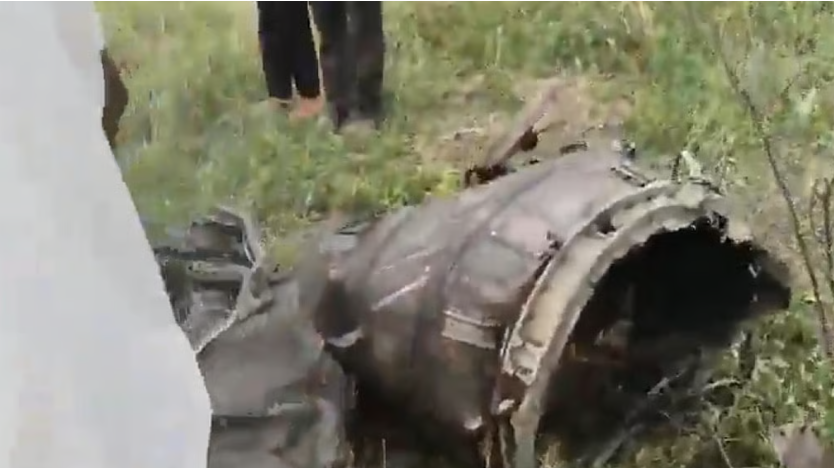
In a tragic incident, a Jaguar trainer aircraft of the Indian Air Force (IAF) crashed on Wednesday afternoon near Bhanoda village in Rajasthan’s Churu district, resulting in the deaths of both pilots onboard. The accident, which occurred around 12:40 pm during a routine training mission, has led to an outpouring of condolences from the IAF and the immediate ordering of a court of inquiry to ascertain the cause.
The ill-fated aircraft, a twin-seater Jaguar, had taken off from the Suratgarh Air Force Station, a strategically vital base located in Suratgarh, Rajasthan, despite not being within the Churu district. The crash site was an agricultural field, and fortunately, no damage to civilian property was reported. Rajaldesar Station House Officer Kamlesh confirmed the recovery of human remains from the crash site, with one body retrieved later in the day from the nearby Ratangarh area.
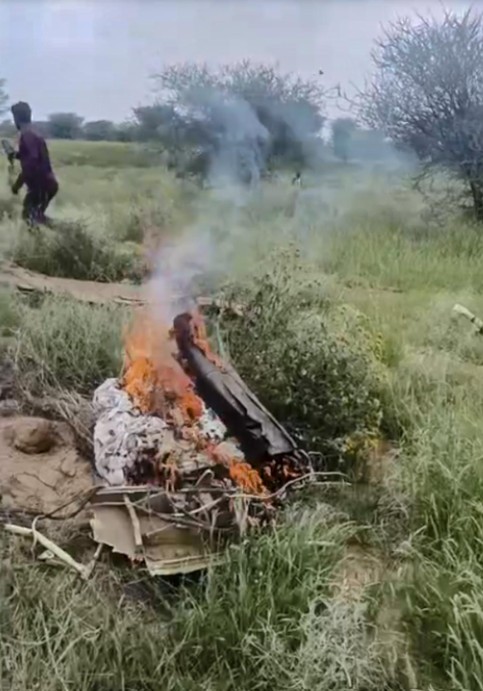
The Indian Air Force swiftly released a statement expressing its profound sorrow, stating, “IAF deeply regrets the loss of lives and stands firmly with the bereaved families in this time of grief.” This incident underscores the inherent dangers faced by military personnel during their service to the nation.
This recent crash is not an isolated event but rather another in a concerning series of accidents involving IAF fighter jets in recent months. In April of this year, a similar two-seater Jaguar aircraft crashed shortly after taking off from Jamnagar Airfield during a night training mission. In that incident, a technical malfunction forced both pilots to eject. Tragically, pilot Siddharth Yadav succumbed to injuries sustained during the ejection, while the other pilot survived with injuries. Earlier, on March 7, another Jaguar fighter jet went down near Ambala, Haryana, though in that instance, the pilot successfully ejected to safety.
The recurring nature of these crashes has understandably raised serious safety concerns within the IAF and among the public. These incidents highlight the immense risks associated with military aviation, particularly during training and operational flights, where pilots push the limits of both themselves and their sophisticated machinery.
As a court of inquiry commences its investigation into the Churu crash, the focus will undoubtedly be on identifying the precise factors that led to this tragedy. This inquiry will be crucial in not only determining the cause of this specific accident but also in informing future safety protocols and training enhancements to mitigate such risks. Meanwhile, the IAF extends its support to the grieving families of the fallen pilots, a somber reminder of the sacrifices made in the line of duty.