
Delhi Revolutionizes Free Bus Travel with ‘Saheli Smart Card’: A Digital Leap Towards Accountability and Modernization
New Delhi, July 9, 2025 – Delhi is on the cusp of a major transformation in its public transport system, as the Delhi Transport Corporation (DTC) prepares to roll out the “Saheli Smart Card.” This innovative initiative is set to replace the long-standing “pink ticket” system, ushering in an era of enhanced accountability, digital integration, and targeted subsidies for women and transgender persons in the capital. The move, spearheaded by the current Delhi government, marks a significant departure from previous policies, prioritizing verified residency and modernizing fare collection across the city’s transit network.
From Pink Tickets to Smart Cards: A Paradigm Shift
The erstwhile Aam Aadmi Party (AAP)-led government’s pink ticket system, while widely utilized, operated on a largely unverified basis. Any woman, regardless of her address, could receive a free pink ticket from a bus conductor. While this democratized access, it also became susceptible to misuse and revenue leakages, as highlighted by transport minister Pankaj Singh. “We conducted raids after our government came to power and found that several fake pink tickets were generated while these women did not even travel on DTC buses, just so that the government exchequer could be depleted,” Singh stated, underscoring the pressing need for reform.
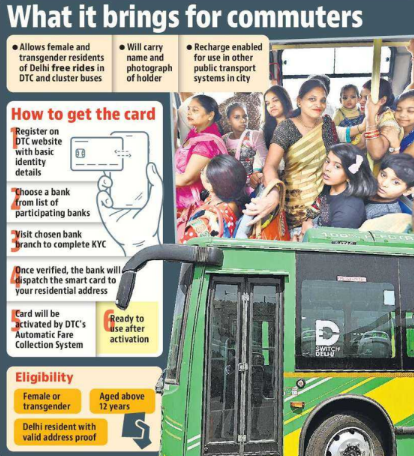
The Saheli Smart Card directly addresses these concerns. Unlike its predecessor, the Saheli Card will only be issued upon submission of Delhi-based address proof and Aadhaar details. This crucial eligibility shift means that only verified residents of Delhi will be able to avail free bus travel, a move aimed at ensuring the benefit reaches its intended recipients and curbing fraudulent claims. “This is a digital reform with a targeted subsidy,” a senior DTC official explained. “Only verified Delhi residents will get Saheli Cards. The goal is to plug leakages and ensure the benefit reaches the intended recipients.”
Digital by Design: Application, Delivery, and Integration
The Saheli Smart Card process is designed for digital efficiency. Beneficiaries will need to apply online via the DTC website, and the personalized cards, bearing the beneficiary’s name and photo, will be delivered directly by post. This online application and postal delivery system streamlines the registration process and minimizes the need for physical interaction, enhancing user convenience.
Furthermore, the Saheli Card is not just a standalone benefit; it’s a foundational component of Delhi’s broader vision to modernize and unify public transit access. The card will be National Common Mobility Card (NCMC)-compliant and operate on an open-loop platform. This significant feature will enable its usage across the Delhi Metro, feeder buses, parking facilities, and even for small retail transactions, offering unparalleled convenience and interoperability within Delhi’s expanding urban infrastructure. The NCMC system is already successfully implemented in transit networks like the Delhi Metro and Noida Metro, proving its efficacy.
A Holistic Modernization: AFC and Beyond
The rollout of the Saheli Card is part of a comprehensive Automated Fare Collection (AFC) system modernization project. This ambitious undertaking will be powered by over 12,000 onboard validators, QR-based ticketing, vending machines, and a centralized clearinghouse to track transactions in real time. The “tap-in-tap-out” model, facilitated by the new cards, will eliminate the need for cash or manual ticketing, promoting seamless and efficient travel.
Beyond the card-based system, the AFC setup will also support QR code-based ticketing via mobile apps. These apps, developed in coordination with the Delhi Metro Rail Corporation (DMRC), will allow users to generate journey-specific QR codes, check their Saheli or NCMC card balance, recharge their cards, and even plan multimodal routes across Delhi, creating a truly integrated public transport experience.
Targeted Benefits and Broader Implications
A key consequence of the Saheli Card’s Aadhaar-seeded and Delhi-residential database linkage is the exclusion of women and transgender persons residing in neighboring NCR cities like Noida, Gurugram, Ghaziabad, and Faridabad from free rides. While these individuals can still purchase the card as regular NCMC users, the free travel benefit will be strictly limited to Delhi residents, reinforcing the scheme’s targeted approach. As Transport Minister Pankaj Singh emphasized, “It is a Delhi service, for the people of Delhi.”
In addition to the Saheli Card, DTC will introduce two other NCMC-enabled cards to further enhance public access to seamless, cashless travel:
- Zero KYC Card: This card will not require any identity verification, allowing for fast and easy issuance and usability across transit networks.
- Full KYC Card: Issued by banks after complete KYC as per RBI and UIDAI norms, this card offers the same features with added regulatory compliance, catering to a wider range of user needs.
Plugging Leakages and Ensuring Accountability
The policy shift comes amid a broader push to improve financial discipline and eliminate fraud in the scheme. While the AAP government facilitated an impressive 1.53 billion free rides for women over five years (2019-2024), with daily ridership reaching approximately 1.1 million women, the previous system’s lack of transparency was a growing concern. The number of pink tickets issued had surged from 177 million in 2020-21 to 400 million in 2022-23, raising questions about accountability.
“The Saheli Card ensures that free rides are logged, traceable, and tied to verified users,” a transport official affirmed, highlighting the core benefit of the new system. This digital record-keeping will provide unprecedented transparency and allow for accurate tracking of the scheme’s impact, preventing the misuse of public funds.
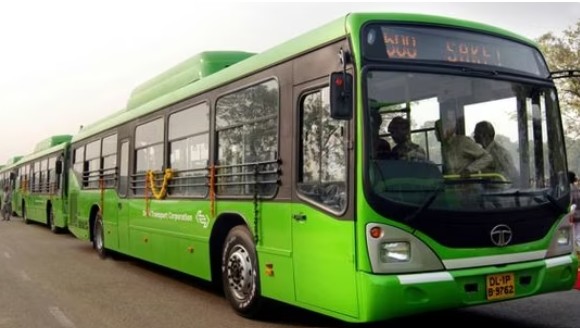
With 44 depots and an active fleet of 3,266 buses (1,950 electric and 1,694 CNG), the DTC is well-positioned to implement this significant reform. The Saheli Smart Card is more than just a new way to offer free bus travel; it represents Delhi’s commitment to leveraging technology for good governance, ensuring equitable access to public services, and building a modern, efficient, and accountable public transport system for its residents.