

Delhi Metro’s Golden Line: A Triumphant Breakthrough Paving the Way for Global Supremacy
The Delhi Metro Rail Corporation (DMRC) has marked a significant milestone in its ambitious Phase 4 expansion, achieving a major breakthrough with the successful completion of an approximately 800-meter long tunnel on the upcoming Golden Line. This latest feat underscores DMRC’s engineering prowess and brings Delhi closer to becoming home to the world’s longest metro network in a single city.
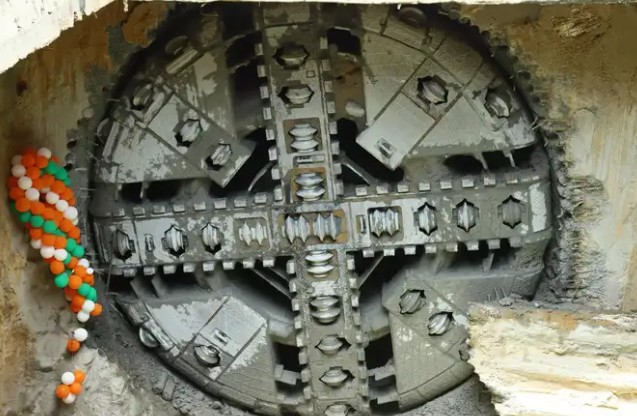
The tunnel, situated at the Tughlakabad Railway Colony Station, is a vital segment of the Tughlakabad-Aerocity corridor. This crucial Golden Line extension is designed to seamlessly connect Maa Anandamayi Marg with Tughlakabad Railway Colony, enhancing connectivity in the bustling South Delhi region and beyond.
A state-of-the-art Tunnel Boring Machine (TBM) was instrumental in this achievement, successfully excavating 792 meters of the tunnel. This impressive underground pathway lies at an average depth of 18 meters and is one of two parallel tunnels designated for two-way movement along the corridor. DMRC anticipates the completion of the second parallel tunnel by July 2025, further streamlining the project’s progress. Earlier, another TBM had successfully completed a 1,550-meter long tunnel at Vasant Kunj Station, part of the same corridor between Kishangarh and Vasant Kunj, with its parallel tunnel expected by June 2025.
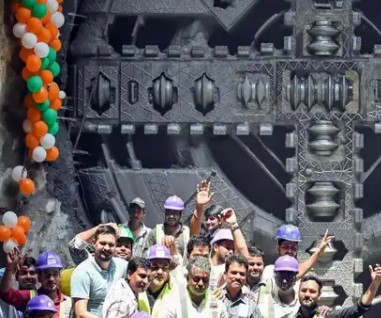
The use of TBMs has been a cornerstone of Delhi Metro’s underground construction strategy since Phase 1. These sophisticated machines are indispensable for tunneling through various soil and rock strata, particularly in densely populated urban environments. Their ability to excavate tunnels with a circular cross-section without disturbing surface structures has revolutionized urban underground infrastructure development. During Phase 3, approximately 30 TBMs were deployed across the national capital to construct nearly 50 kilometers of underground sections, showcasing DMRC’s extensive experience with this technology.
The current Phase 4 expansion involves the construction of 40.109 kilometers of underground metro lines. The Tughlakabad-Aerocity corridor alone accounts for a substantial 19.343 kilometers of this underground network. This extensive underground infrastructure is poised to significantly improve connectivity between South Delhi and other vital areas, addressing the city’s ever-growing transportation needs.

As of March 2025, the Delhi Metro already boasts an impressive network of 395 kilometers, operating 289 stations across 10 distinct colored lines. Its vast reach extends beyond Delhi to cover key cities within the National Capital Region (NCR), including Ghaziabad, Faridabad, Gurugram, Noida, Bahadurgarh, and Ballabgarh.
With the rapid pace of its Phase 4 work, Delhi Metro is on the cusp of setting a new global benchmark. By the end of this year, with the operationalization of a new 12-kilometer route, Delhi’s metro network is set to surpass New York’s 399-kilometer system, officially becoming the world’s longest metro network in a single city. This remarkable achievement will not only be a source of immense pride for India but also a testament to DMRC’s visionary planning and execution.
The latest tunnel breakthrough on the Golden Line is more than just an engineering feat it’s a symbol of Delhi’s relentless march towards becoming a global urban transit leader, promising enhanced mobility and a better quality of life for millions.

Generate Audio Overview
Deep Research
Canvas