
Delhi Triples Solar Subsidy: A Bold Step Towards a Greener, More Affordable Future
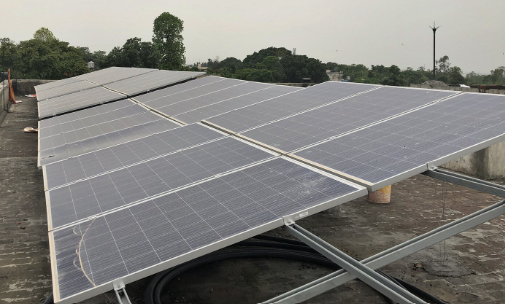
New Delhi, July 17, 2025 – In a significant boost to its renewable energy ambitions, the Delhi government has announced a substantial increase in subsidies for rooftop solar systems, effective from July 10. This amendment to the Delhi Solar Energy Policy, 2023, is poised to make solar power significantly more accessible and affordable for both individual households and collective residential communities across the capital.
The revised policy dramatically trebles the subsidy for households, offering a remarkable ₹10,000 per kilowatt (kW) for rooftop solar installations up to 3 kW. This translates to a maximum subsidy of ₹30,000 per consumer, a considerable jump from the previous ₹2,000 per kW, capped at ₹10,000. This state subsidy is in addition to the existing central government subsidy of up to ₹78,000 under the PM Surya Ghar: Muft Bijli Yojana, bringing the total possible subsidy for Delhi residents up to an impressive ₹1.08 lakh, making Delhi the most financially supportive region for residential solar in India.
Expanding Support to Communities and EV Charging
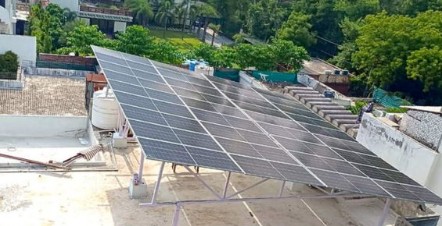
Beyond individual households, the amended policy introduces a vital new capital subsidy for Group Housing Societies (GHS) and Resident Welfare Associations (RWAs). These entities are now eligible for ₹2,000 per kW for solar systems installed for common facilities, including crucial electric vehicle (EV) charging infrastructure. This incentive applies to systems up to 500 kW, directly addressing the growing demand for EV charging solutions within residential complexes and promoting sustainable transportation.
This strategic move aligns with Delhi’s broader vision for a greener capital, where solar energy not only powers homes but also supports the expanding EV ecosystem. The integration of solar with EV charging infrastructure offers a truly sustainable model for urban development.
Streamlined Financing with the Refined RESCO Model
A key innovation in the updated policy is the refined Hybrid Renewable Energy Service Company (RESCO) model. This financing structure, where solar installations are funded, owned, and maintained by third-party developers, has been simplified to eliminate upfront costs for consumers.
Under the new RESCO model, consumers will now receive a single consolidated electricity bill from the DISCOMs, which will include their solar bill payment to the RESCO developer at a pre-determined tariff. This is a significant improvement over the previous system, which often required consumers to manage separate agreements with RESCO developers and DISCOMs. This unified billing system, combined with the removal of upfront investment, makes solar adoption virtually hassle-free for consumers, encouraging widespread uptake.
Furthermore, an early-bird incentive based on generation has been introduced for commercial and industrial consumers opting for the hybrid RESCO model. This incentive will apply to the first 200 MW of installed capacity, providing an additional push for businesses to go solar.
Benefits Beyond the Bill: A Sustainable Future
These policy changes are expected to bring a multitude of benefits to Delhi residents and the environment:
- Significant Electricity Bill Reduction: With higher subsidies and the convenience of the RESCO model, residents can expect substantial reductions in their monthly electricity bills, potentially leading to zero bills for those generating excess power.
- Reduced Carbon Footprint: Increased solar adoption directly contributes to a cleaner environment by reducing reliance on fossil fuels and lowering carbon emissions, a critical step for Delhi’s air quality.
- Enhanced Energy Independence: Generating electricity on-site provides greater energy independence and acts as a buffer against future electricity price hikes.
- Increased Property Value: Homes and societies equipped with solar panels often see an increase in property value.
- Boost to Green Jobs: The expansion of solar installations will create new opportunities in the green energy sector, contributing to local employment.
- Simplified Application Process: The amendment also provides greater flexibility in the application process, aiming for a more user-friendly experience for those looking to switch to solar. Subsidy disbursements will be carried out through the direct benefit transfer (DBT) system, with data for installations registered through the national PM Surya Ghar portal automatically sourced for DBT.
Delhi’s Ambitious Solar Targets
The Delhi Solar Energy Policy 2023, notified in March 2024, has an ambitious target of achieving 4,500 MW of solar capacity by 2027. This includes 750 MW of rooftop solar within the state and approximately 3,750 MW from utility-scale solar sourced from outside Delhi. The latest subsidy increase and policy refinements are crucial steps towards realizing these targets, accelerating Delhi’s transition towards a more sustainable and energy-independent future.
By making solar power more financially attractive and logistically simpler, the Delhi government is not just updating a policy; it’s empowering its citizens to actively participate in the clean energy revolution, promising a brighter and healthier tomorrow for the capital.