

Delhi Gears Up for First Electoral Roll Overhaul in 15 Years, Signalling Potential Nationwide Clean-Up
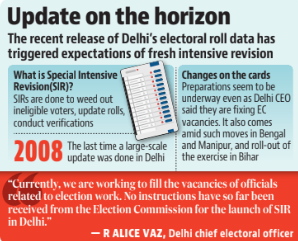
New Delhi, July 30, 2025 – Delhi is on the cusp of undertaking its first Special Intensive Revision (SIR) of electoral rolls in over 15 years, with groundwork already underway for a potential large-scale, house-to-house verification drive. This significant development, despite no major elections scheduled in the capital until at least 2027, strongly signals a concerted push by the Election Commission of India (ECI) to reboot voter rolls nationwide. The last such comprehensive exercise in the national capital was conducted in 2008.
The speculation surrounding a nationwide roll-out intensified earlier this month when the Chief Electoral Officer (CEO) of Delhi uploaded electoral data from that 2008 SIR to its website. While ECI officials described this as “procedural,” it is widely seen as a precursor to a more expansive, nationwide exercise deemed necessary to ensure the credibility of electoral data, especially in dynamic urban centers where migration and rapid demographic shifts can often distort records.
Why an SIR Now? The Imperative for Electoral Integrity
Regular summary revisions of electoral rolls occur annually, typically relying on self-reporting by citizens for updates. In contrast, an SIR is a far more extensive, data-driven undertaking. It involves household-level surveys and meticulous document verification to update existing records, delete ineligible entries (such as deceased voters or those who have relocated), and include new eligible voters.
A senior ECI official underscored the critical importance of an SIR: “With time, rolls accumulate errors—duplicates, deceased names, migrated voters, or entries made through fraudulent documentation. A nationwide SIR will help clean up the rolls and enhance electoral integrity. BLOs (Booth Level Officers) will be central to this effort, going house to house for physical verification.” This proactive approach is crucial for maintaining the sanctity of the electoral process and ensuring that voter lists are accurate reflections of the electorate.
Delhi’s Preparations Underway Amidst Anticipation
While Chief Electoral Officer R Alice Vaz stated that “no official communication has yet been received from the Election Commission of India regarding the launch of the SIR in Delhi,” confirming that their immediate focus is on filling vacancies related to election work, other senior officials indicate that the revision is “likely to begin very soon.” Operational instructions, such as the qualifying date and field survey timelines, are still awaited. Media reports speculating on an August 1 start in Delhi have not been officially confirmed by the ECI.
Delhi’s most recent summary revision, using January 1, 2025, as the qualifying date, reported 15.5 million registered voters in the Capital, an increase from 14.7 million in 2020. This includes 8.3 million men, 7.17 million women, and 1,261 identifying as the third gender.
A Nationwide Trend: Other States Join the Preparatory Work
The national picture suggests that Delhi is not alone in ramping up activity. Several other states are also initiating preparatory work, signaling a coordinated national effort:
- West Bengal: Where assembly elections are due in 2026, the CEO has already published partial SIR data from 2022 for 11 districts, covering over a third of the state’s 294 assembly constituencies.
- Manipur: Field-level preparations have been initiated. On July 25, a meeting chaired by Joint CEO Ramananda Nongmeikapam briefed political parties on the “proposed SIR” and discussed strategies for house-to-house surveys and the rationalization of polling stations.
- Bihar: The SIR is already underway and has unfortunately become the subject of a Supreme Court hearing. The court has stated it will intervene if the draft roll, scheduled for publication on August 1, shows large-scale voter exclusions. Allegations in Bihar include duplication and the possible removal of over 6.5 million entries deemed ineligible, with the next court hearing fixed for August 12. This situation in Bihar underscores the potential complexities and controversies that can arise during such large-scale revision exercises.
The potential nationwide SIR, spearheaded by the ECI, represents a monumental undertaking. It reflects a commitment to enhancing electoral integrity, particularly crucial in a rapidly evolving democratic landscape. While the process may face challenges, as seen in Bihar, its successful implementation will undoubtedly strengthen the foundation of India’s electoral system for future polls.