
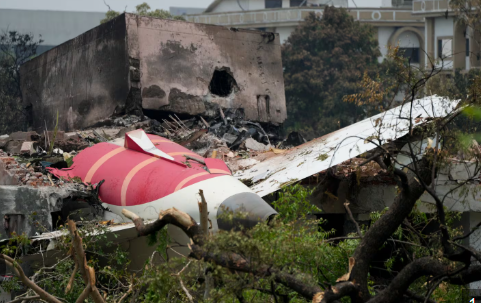
New Delhi, July 12, 2025 – The preliminary report from the Aircraft Accident Investigation Bureau (AAIB) into the tragic crash of Air India Flight 171 on June 12, which claimed 260 lives, has shed the first official light on the disaster. While the report offers crucial insights into the immediate cause, it also deepens the enigma surrounding why both engines suddenly lost power during takeoff. The core question – what caused the engine fuel cutoff switches to move to the “CUTOFF” position – remains unanswered and is now the central focus of a comprehensive ongoing investigation.
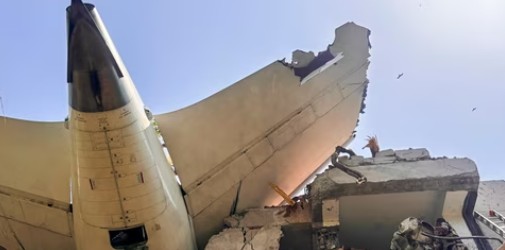
The Critical Moment: Simultaneous Engine Shutdown
According to the preliminary findings, at precisely 08:08:42 UTC, just as the Boeing 787 Dreamliner reached its maximum takeoff speed of 180 knots, both engine fuel cutoff switches “transitioned from RUN to CUTOFF position one after another with a time gap of 01 sec.” This immediate cessation of fuel supply starved both engines, leading to a rapid and catastrophic loss of power. This finding definitively points to the fuel cutoff as the direct cause of the engines failing, but the critical “why” – whether it was human action, a mechanical failure, or an electronic malfunction – is still under intense scrutiny.
Ruling Out the Obvious: A Narrowing Field of Inquiry
The AAIB’s preliminary report has systematically eliminated several potential factors, narrowing the scope of the ongoing investigation. Investigators have confirmed that:
- Weather conditions were optimal, with light winds and clear skies.
- There was no evidence of a bird strike, either in CCTV footage or through physical examination of the aircraft wreckage.
- The aircraft configuration was correct for takeoff, with flaps set at 5 degrees and landing gear retracting normally.
- The weight and balance of the aircraft were within normal operating limits.
- Fuel quality was satisfactory, as confirmed by tests on samples from airport fuel trucks.
- Both engines appeared to be operating normally with no pre-existing problems until the sudden fuel cutoff.
These exclusions underscore that the issue was not external or related to routine operational parameters, pushing the investigation squarely towards the internal mechanics and crew actions related to the fuel system.
The Enigmatic Cockpit Exchange: A Denial of Intent
One of the most crucial pieces of information emerging from the cockpit voice recording (CVR) is a perplexing exchange between the pilots. According to the AAIB’s paraphrased account, “one of the pilots is heard asking the other why did you cutoff. The other pilot responded that I did not do so.” This suggests that while one pilot observed the fuel cutoff, his colleague explicitly denied initiating the action.
The flight was being operated with First Officer Clive Kunder as the pilot flying (PF) and Captain Sumeet Sabharwal as the pilot monitoring (PM). The report does not specify which pilot made which statement, leaving room for further analysis of the CVR. This denial by one pilot, while not definitively ruling out human error, strongly suggests that if human action was involved, it might have been unintentional or inadvertent. Further detailed analysis of the CVR will be critical to understand the full context of this exchange and any other alarms or communications that may have transpired.
A Valiant, Yet Futile, Attempt at Recovery
Despite the sudden and critical nature of the engine failure, the pilots made a courageous attempt to save the aircraft. Within a mere 10 to 14 seconds of the fuel cutoff, they moved both fuel switches back to the “RUN” position (Engine 1 at 08:08:52 UTC, Engine 2 at 08:08:56 UTC). This immediate action initiated automatic restart sequences for both engines, with Engine 1 showing signs of recovery and Engine 2 attempting to relight.
However, recovery proved impossible due to the insufficient time and altitude available. The aircraft was only approximately 625 feet above the ground when the engines failed. Modern jet engines typically require several minutes and significantly higher altitudes to complete a successful restart procedure. The 29 seconds available before impact simply did not provide the necessary window for the engines to regain full power and prevent the crash.
A History of Concerns: The Advisory Not Acted Upon
The preliminary report also reveals a relevant safety concern regarding the aircraft, VT-ANB, despite its otherwise clean maintenance record and valid airworthiness certificates. In 2018, the US Federal Aviation Administration (FAA) issued Special Airworthiness Information Bulletin (SAIB) No. NM-18-33. This bulletin pertained to potential problems with fuel control switch locking mechanisms on Boeing aircraft, including the 787 model. The SAIB was issued following reports of fuel control switches on Boeing 737s being installed with their locking features disengaged.
These locking features are designed precisely to prevent inadvertent movement of the fuel switches. When disengaged, the switches could potentially be moved more easily by vibration, inadvertent contact, or other factors. Crucially, as the FAA bulletin was advisory rather than mandatory, Air India did not carry out the suggested inspections. While Air India had replaced the aircraft’s throttle control module twice (in 2019 and 2023), these replacements were unrelated to the fuel switch issues highlighted by the FAA. This revelation raises critical questions about the airline’s policy on acting on advisory bulletins and whether the disengagement of these locking mechanisms played any role in the switches moving to the “CUTOFF” position.
The Road Ahead: A Complex and Comprehensive Investigation
The AAIB stresses that this is a preliminary report, and its findings are “subject to change” as more evidence is gathered and analyzed. The investigation is far from over, with several key areas of focus:
- Detailed analysis of black box data: Beyond the initial analysis, investigators are conducting a comprehensive examination of the approximately 49 hours of flight data and two hours of voice recordings for additional clues.
- Detailed analysis of limited fuel samples: Scrutiny of the recovered fuel samples will continue.
- Mechanical examination: The fuel control switches and related components will undergo a thorough mechanical examination to determine if any malfunction occurred.
- Interviews: Additional witnesses, connected personnel, and technical experts will be interviewed to gather more information.
The AAIB’s statement that “additional details are being gathered based on the initial leads” and that the team will “review and examine additional evidence, records and information that is being sought from the stakeholders” underscores the breadth of the ongoing inquiry. A final report, which will aim to determine the probable cause and issue safety recommendations, is expected to take months, if not years, to complete. The aviation world, and indeed the families of those lost, await these crucial findings as the investigation into Air India Flight 171 continues to seek answers in the wake of this devastating tragedy.