
Delhi’s Bold Move: Fuel Ban for Old Vehicles Kicks Off with AI and Police Teams at Pumps
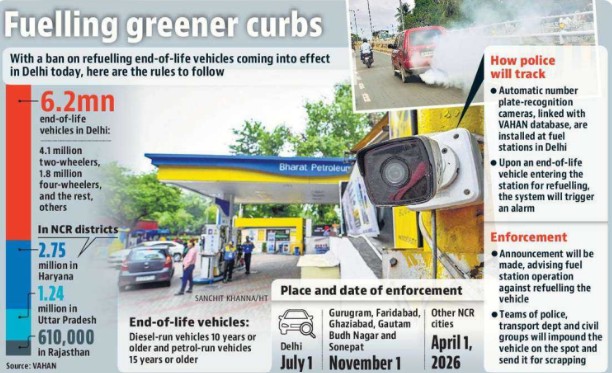
New Delhi, India – July 1, 2025 – In a monumental step aimed squarely at curbing its notorious air pollution, the National Capital Territory of Delhi today began rigorously enforcing a ban on refuelling old vehicles. As of 6:00 AM on Tuesday, July 1, 2025, petrol (and CNG) vehicles older than 15 years and diesel vehicles older than 10 years are strictly prohibited from purchasing fuel at any petrol pump across Delhi. This directive, rooted in Supreme Court judgments from 2018 and National Green Tribunal (NGT) orders from 2014, marks a new era in Delhi’s fight for cleaner air, backed by advanced technology and extensive on-ground deployment.
The implementation strategy, meticulously chalked out by the Transport Department, involves a robust multi-agency effort. Personnel from the Transport Department itself, Delhi Police, Traffic Police, and the Municipal Corporation of Delhi (MCD) have been strategically deployed to ensure compliance at fuel stations citywide.
Tech and Manpower: The Pillars of Enforcement
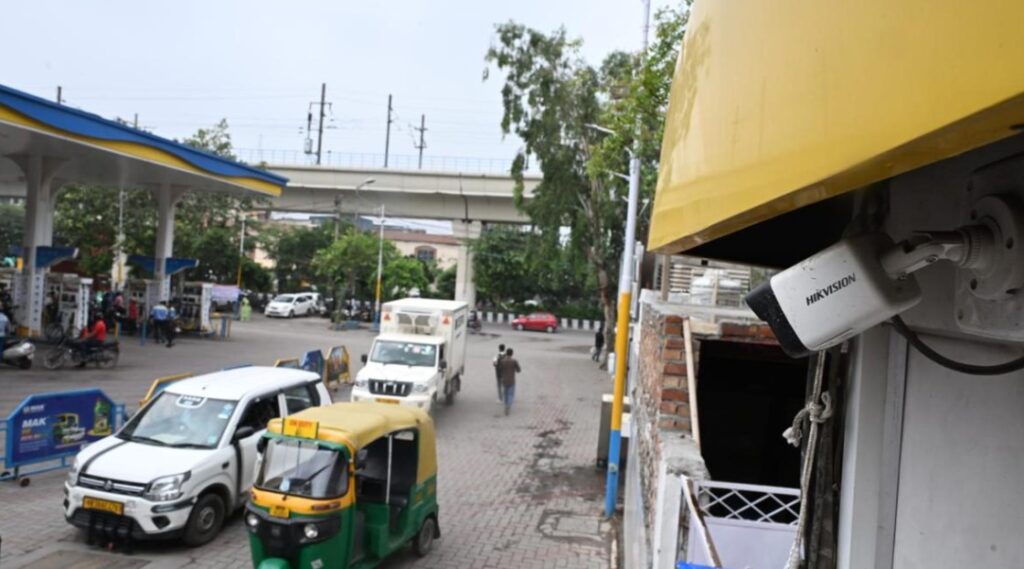
To enforce this sweeping ban, the Delhi government has equipped nearly 350 petrol pumps across the capital with sophisticated Automatic Number Plate Recognition (ANPR) cameras. These AI-powered cameras are directly linked to the central VAHAN database, allowing for instant identification of “End-of-Life” (EoL) vehicles based on their registration age.
“If any such vehicle arrives, the cameras detect it instantly and trigger a hooter to alert the staff,” explained Sub-Inspector Dharamveer of the Transport Enforcement team, stationed at Chirag Delhi’s Dhingra petrol pump since early morning. He highlighted that in cases where an old vehicle is detected, it is immediately denied fuel and, if caught plying, is impounded on the spot.
Beyond technology, human vigilance forms a critical component of the enforcement drive. “We are here from 6 am to ensure that no old vehicle is allowed to refuel. Petrol pumps have been directed to deny fuel to such vehicles,” Sub-Inspector Dharamveer further stated.
Assistant Sub-Inspector Jagan Lal of the Delhi Traffic Police elaborated on the layered approach: “The cameras will inform automatically, but our teams are also checking vehicles using our central database. The drive is being carried out jointly with local police and transport officials to ensure full compliance and to maintain law and order.” Multiple teams from these agencies have been deployed at various petrol pumps, particularly in high-traffic areas like South Delhi.
Petrol pump staff have also been thoroughly briefed on the new regulations. Hriday Ram, a staff member at Dhingra petrol pump, confirmed, “We have been instructed not to fill fuel in any old vehicle. The moment such a vehicle is detected by the camera or by us, we alert the police or enforcement team immediately.”
Impact and Wider Implications
This ban is set to significantly impact Delhi’s vehicular landscape. Data from the VAHAN database indicates that approximately 62 lakh (6.2 million) EoL vehicles are registered in Delhi alone, comprising around 41 lakh two-wheelers and 18 lakh four-wheelers. The measure directly targets a major source of air pollution, as older vehicles, especially those operating below BS-VI emission standards, contribute disproportionately to harmful emissions. For instance, a BS4 vehicle emits 5.5 times more particulate matter (PM) than a BS6 vehicle.
Owners of these older vehicles now face immediate decisions: scrap their vehicle at authorized facilities, convert it to an electric vehicle (if feasible), or seek a No Objection Certificate (NOC) to re-register it in other states that do not yet have such stringent age restrictions. Vehicles found in violation on Delhi roads can be impounded, incurring fines of ₹5,000 for two-wheelers and ₹10,000 for four-wheelers, in addition to towing and storage charges.
The Delhi government’s clear Standard Operating Procedures (SOPs) issued on June 17, mandate that all petrol pumps must maintain logs (manual or digital) of denied fuel transactions and prominently display signage warning against refuelling EoL vehicles. Non-compliant fuel stations face penalties under Section 192 of the Motor Vehicles Act, 1988, with weekly reports being submitted to the Commission for Air Quality Management (CAQM) and the Ministry of Petroleum and Natural Gas.
This move is not an isolated one but part of a larger, phased strategy by the CAQM to clean the air across the National Capital Region. The fuel ban will be extended to Gurugram, Faridabad, Ghaziabad, Gautam Buddha Nagar (Noida), and Sonipat from November 1, 2025, and to the rest of the NCR by April 1, 2026. Furthermore, from November 2025, non-BS VI compliant vehicles from other states will be prohibited from entering Delhi unless they run on cleaner fuels like CNG, LNG, or electricity.
Delhi’s rigorous enforcement of the old vehicle fuel ban marks a crucial turning point in its persistent battle against air pollution. By combining cutting-edge technology with on-ground vigilance, the city is sending a clear message: clean air is a non-negotiable priority, and measures to achieve it will be implemented with unwavering resolve.